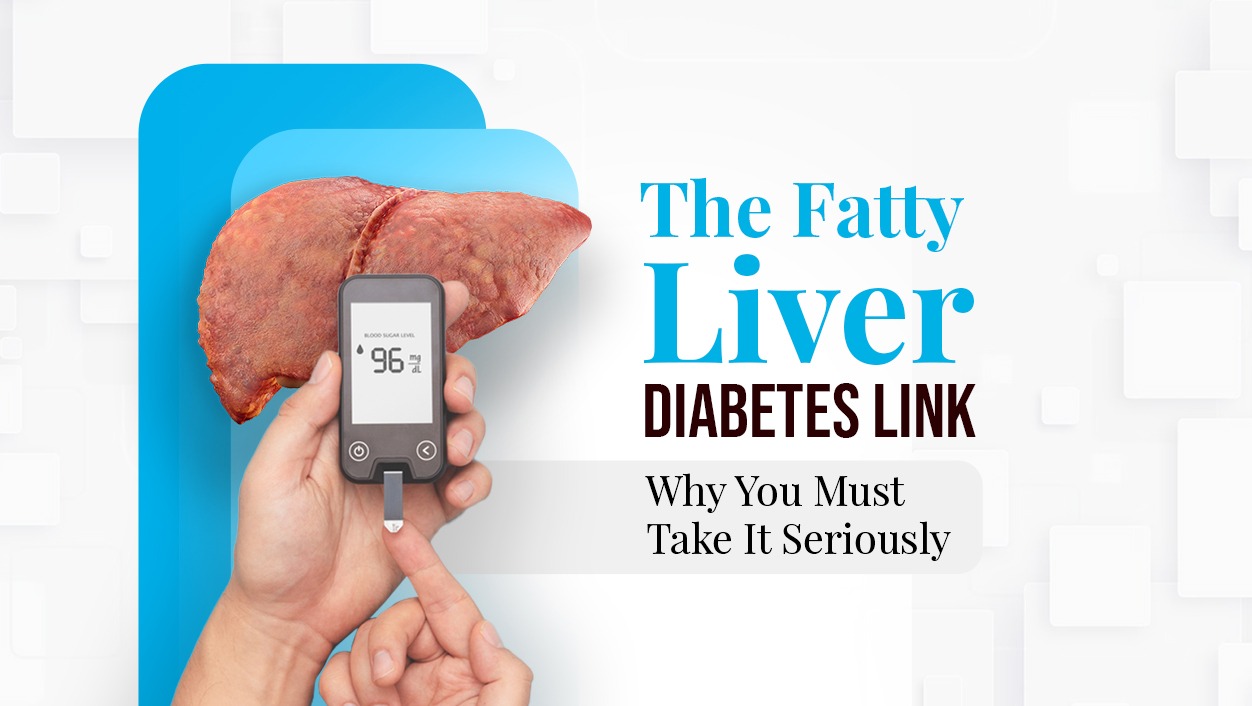
You may have heard someone say, “My friend has fatty liver, but he doesn’t even drink.”
It’s a common reaction. Many people still believe liver problems only happen to those who drink alcohol. But that’s no longer the case.
Non-alcoholic fatty liver disease (NAFLD) is now one of the most common liver conditions we see. It often shows up in people who don’t drink at all. At the same time, type 2 diabetes is becoming more common, especially among younger adults.
What many don’t realise is that these two conditions are deeply connected. One can lead to the other and when they exist together, they quietly increase long-term health risks.
In this blog, we’ll explore how they’re linked, what signs to watch for and why it’s important to act early, even if you feel completely fine right now.
What Exactly Is Fatty Liver?
Let’s keep it simple. Your liver naturally has a small amount of fat. That’s normal. But when too much fat builds up, it starts affecting how the liver works and that’s what we call fatty liver.
There are two common types. One is linked to alcohol. The other, which we see more often now, is called non-alcoholic fatty liver. It tends to show up in people who are overweight, eat a lot of refined carbs, have high cholesterol or live a mostly inactive lifestyle.
In the early stages, most people don’t feel a thing. No pain, no clear symptoms. It often shows up during an ultrasound or routine blood work. But over time, that extra fat can lead to inflammation, scarring and long-term liver problems. And what’s more important, it is closely tied to how your body handles blood sugar, which brings us to the next part.
How Fatty Liver and Diabetes Are Connected ?
Most people don’t usually link the liver to blood sugar, but the two are closely tied.
Your liver helps manage sugar levels by storing some and releasing it when your body needs energy. When too much fat builds up in the liver, that process slows down. Over time, this can make your body less sensitive to insulin, the hormone that keeps sugar in check. This is called insulin resistance.
Left unchecked, insulin resistance can lead to type 2 diabetes.
And it goes both ways. People who already have diabetes are also more likely to develop fatty liver, even if they don’t drink alcohol. So the two often show up together, each making the other worse without causing obvious symptoms.
That’s the tricky part. You may feel completely fine, but both conditions could be progressing quietly in the background. This is why we often detect them together during routine check-ups.
What Causes Fatty Liver in People with Diabetes?
If you already have type 2 diabetes, your chances of developing fatty liver are higher. It’s not just because of sugar, but because of how your body processes energy overall.
When the cells stop responding well to insulin, the liver tries to make up for it by working harder. Over time, it starts storing extra fat. But that’s not the only reason.
Certain diabetes medications, long-standing sugar imbalance and even low-grade inflammation can all push fat into the liver. People who are not very active or have weight around the belly area tend to store fat in the wrong places and the liver is one of them.
In short, it’s not caused by one single thing. It’s how your body handles insulin, stores fat and reacts to long-term imbalance.
Signs You Shouldn’t Ignore
One of the biggest challenges with both fatty liver and diabetes is how quietly they begin. You may feel fine, look fine and go about your day without any clue something is changing inside.
That’s why we often find both conditions during routine health check-ups, not because of symptoms, but through basic scans or blood tests.
Still, there are some small signs worth paying attention to:
- Feeling tired all the time, even after rest
- Unexplained weight gain or difficulty losing weight
- Mild heaviness or discomfort on the right side of the abdomen
- Darkening of skin in the neck or underarms (a sign of insulin resistance)
- Raised liver enzymes or borderline sugar levels in your lab reports
- A family history of diabetes or fatty liver
- Increased belly fat, even if your weight seems “normal”
You don’t need to panic if you notice one of these. But they’re signals and it’s better to check early than wait for symptoms to grow louder.
What You Can Do
The good news is, fatty liver, even if you already have diabetes, can often be slowed down, managed, or even reversed in its early stages. But it takes some consistent changes in your routine.
Here’s what usually helps:
- Eat balanced meals: Cut back on sugar, white rice, fried foods and snacks. Focus on vegetables, whole grains and home-cooked food.
- Be physically active: A 30-minute walk most days can improve liver health and blood sugar. Regular movement matters more than intensity.
- Lose a bit of weight if you need to: You don’t have to aim for a major weight loss. Just 5 to 10 percent of your body weight can lower liver fat, improve blood sugar and ease pressure on your organs.
- Keep up with health check-ups: Blood tests like LFT and HbA1c, cholesterol, and an occasional scan help track how things are going and guide your treatment.
- Be cautious with alcohol: If you have any form of fatty liver, it is safest to limit or avoid alcohol completely. Even if your condition is not alcohol-related, a stressed liver does not need extra load.
Final Thoughts
We wrote this because this is no longer a rare problem.
Today, more people are being diagnosed with fatty liver and type 2 diabetes, often in their 30s and 40s, sometimes even earlier. What used to be seen in older adults is now showing up in working professionals, young parents and even teenagers.
The reasons are everywhere: more time sitting, less movement, more packaged food, fewer meals cooked at home and stress that never switches off. And yet, many people don’t realise these everyday habits are quietly shaping their health from the inside.
This blog isn’t about fear. It’s about awareness. Because with early action and honest attention, these conditions can be managed and in many cases, even reversed.
You don’t need to overhaul your life overnight. But it might be time to check in. With your habits. With your numbers. And with your doctor.