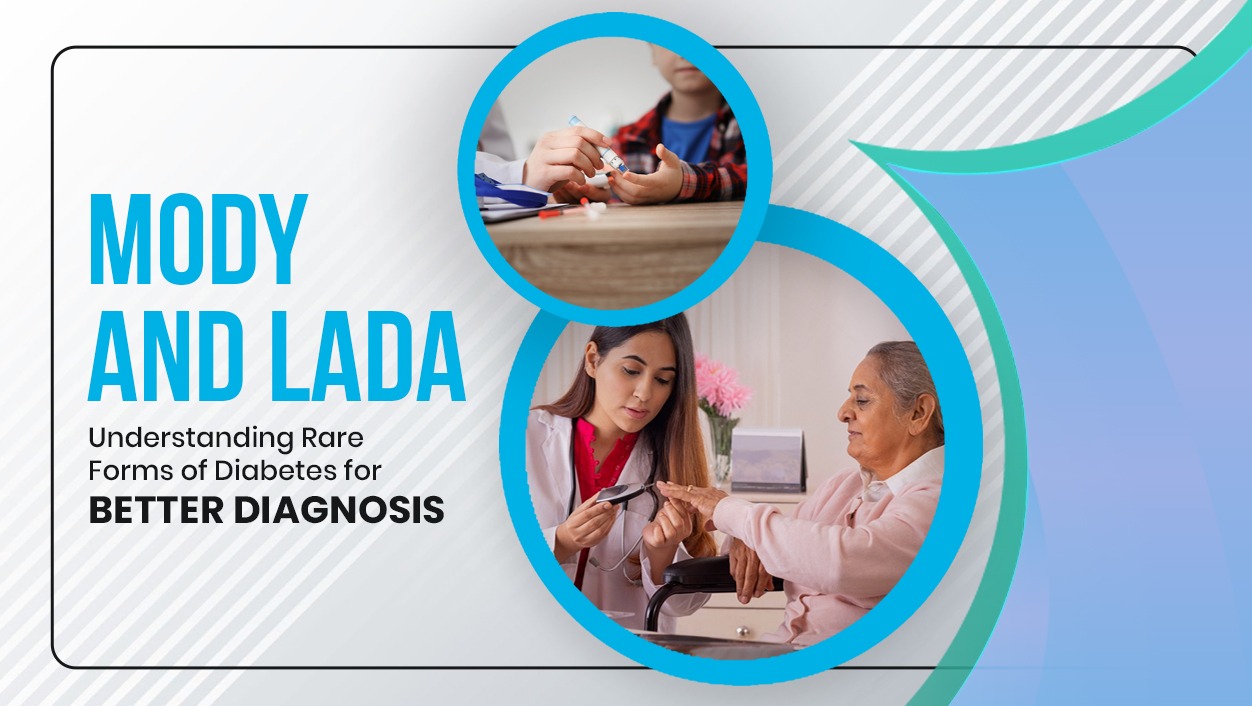
Most people think diabetes means either type 1 or type 2. But diabetes is not just two kinds. It is a group of conditions and some of them are rare. Because they look a lot like type 1 or type 2, they often get missed. Some types are very rare and may only be found through genetic tests or in people with unusual medical conditions. Even though they are uncommon, they give us important clues about how diabetes develops in the body.
Here are the main types:
| Type | What it means |
| Type 1 | The body’s own defense system destroys insulin cells, as a result Person needs insulin. |
| Type 2 | The body does not use insulin properly and slowly makes less of it. |
| Gestational | First seen during pregnancy. |
| MODY | Runs in families, starts young, caused by a single gene change. |
| LADA | Starts in adults, a slow form of autoimmune diabetes. |
| Neonatal | Found in babies under 6 months, genetic in nature. |
| Type 3c | Happens when the pancreas is damaged by illness, surgery or injury. |
| Steroid/drug-induced | Caused by some medicines, like steroids. |
| Cystic fibrosis diabetes | Linked to scarring in the pancreas of people with cystic fibrosis. |
| Rare genetic syndromes | Seen in conditions such as Wolfram syndrome or MIDD. |
From these, two forms need special attention because they are often mistaken for type 1 or type 2. One is MODY. The name may sound odd, sometimes even confused with “Moody” or “Modi,” but in medicine it stands for Maturity Onset Diabetes of the Young. The other is LADA, short for Latent Autoimmune Diabetes in Adults.
These are not well known and that is why many people end up with the wrong treatment for years. Knowing about them helps in getting the right care at the right time.
1.Maturity Onset Diabetes of the Young (MODY)
We’ve seen that MODY is one of the lesser-known types of diabetes. To make it clearer, let’s look at some common questions people usually have about this condition. These answers will help give a better picture of what MODY really is and why it matters.
Q: What is MODY and how is it different from type 1 or type 2 diabetes?
A: MODY is a rare type of diabetes that usually starts at a young age and runs in families. Unlike type 1, it is not caused by the immune system attacking the pancreas. Unlike type 2, it is not mainly linked to lifestyle or obesity. It happens because of a change in a single gene.
There are different kinds of MODY, each linked to a specific gene change. The most common ones are due to changes in the HNF1A, HNF4A or GCK genes.
Q: Who is at risk of developing MODY and is it inherited?
A: MODY is passed from parent to child. If one parent has the gene change, there is a 50% chance their child may also develop MODY.
Q: What are the typical signs and symptoms of MODY?
A: The symptoms look similar to other types of diabetes. It includes increased thirst, frequent urination, tiredness and sometimes unexpected weight loss. In many cases, the sugar levels are high but not as extreme as type 1.
Q: How is MODY diagnosed and why is diagnosis often delayed?
A: Diagnosis usually starts with routine blood sugar tests, but the final confirmation comes from genetic testing. It is often delayed because MODY looks so much like type 1 or type 2, so many people are treated as those for years before the correct diagnosis is made.
Q: Can MODY be managed with lifestyle changes or does it require medication or insulin?
A: The treatment depends on which gene is affected. Some types of MODY can be managed with tablets, some need insulin and in certain cases lifestyle changes alone are enough. For example, MODY 2 (GCK mutation) is often managed by diet alone.
Q: What complications may arise with MODY if left untreated?
A: If blood sugar remains high for years, it can cause the same problems seen in other types of diabetes like damage to eyes, kidneys, nerves and heart.
Q: Is MODY the same as juvenile diabetes?
A: No. Juvenile diabetes usually means type 1 diabetes in children. MODY is different. It is caused by a gene change and is not an autoimmune disease .
Q: What does having MODY mean for family members? Should relatives get tested?
A: Yes. MODY can be hereditary, that means close relatives may need testing. Identifying the condition early helps with choosing the right treatment and avoid complications later.
2.Latent Autoimmune Diabetes in Adults. ( LADA)
We’ve looked at MODY, now let’s move to another uncommon form of diabetes. To understand LADA better, here are some of the most common questions people ask:
Q: What is LADA?
A: LADA is sometimes called type 1.5 diabetes. It has features of both type 1 and type 2. The body’s immune system slowly attacks the pancreas. Insulin production falls slowly over months or years. In type 1, it happens much faster.
Q: What are the symptoms of LADA?
A: People with LADA may feel very thirsty and need to urinate a lot. They may lose weight without even trying and have blurry vision. Feeling tired or weak is common. Some notice numbness or tingling in their hands and feet. Cuts or sores may take longer to heal than usual.
Q: How is LADA diagnosed? Are specific tests required?
A: Routine blood sugar tests cannot confirm LADA. Doctors check for specific antibodies, especially GADA. They may also measure C-peptide to see how much insulin the body is making. Low or falling levels usually show LADA.
Q: Why was I initially diagnosed with type 2 diabetes instead of LADA?
A: LADA often appears in adults who are not overweight and don’t fit the typical picture of type 2. At first, tablets for type 2 may seem to work, but as the pancreas continues to lose function, it becomes clear that the condition is different.
Q: Can LADA be managed with oral medications, diet, and lifestyle, or do all patients eventually need insulin?
A: Many people with LADA start on tablets, diet changes and exercise. But most will eventually need insulin as their pancreas produces less and less of it. The speed of progression is different for each person.
Q: How fast will my condition progress? How often should I be re-evaluated?
A: Progression is slower than type 1, but faster than the majority of type 2 cases. Some people may require insulin within a few months, while others can go for several years. Regular check-ups every three to six months allow doctors to adapt treatment as the condition changes.
Final Thoughts
We now understand that diabetes is more than just type 1 or 2. There are additional types, and learning about them can be both intriguing and beneficial in everyday life. Don’t be alarmed by the names. Diabetes is not a curse. With the right diagnosis, proper care, and timely treatment, it can be managed well. Knowing more simply gives you more control.